What Are Natural Fiber Rugs?
Natural fiber rugs are floor coverings produced using fibers obtained from plants or animals.
Common materials include wool, cotton, jute, sisal, seagrass, hemp, and silk.
Each fiber offers distinctive characteristics.
Wool provides softness and resilience. Cotton is lightweight and versatile. Jute contributes earthy texture. Sisal offers a firm, structured appearance. Seagrass introduces subtle sheen, while hemp offers a durable plant-based option.
These materials can be woven, knotted, braided, or tufted into rugs of different sizes and styles. One important distinction is that natural materials are not automatically environmentally harmless.
Dyes, backing, adhesives, and finishing treatments influence the environmental characteristics of the finished product. Therefore, responsible buyers should evaluate the complete rug rather than focusing exclusively on the fiber name.
Why Natural Fiber Rugs Are Transforming Modern American Interios
Modern luxury is increasingly associated with meaningful materials, craftsmanship, and timeless design. A home filled with expensive furniture may still feel impersonal if its surfaces lack warmth and character.
Natural textures help address this problem.
A jute rugcan soften a minimalist living room. A hand-knotted wool rug can introduce elegance into a luxury villa. A colourful cotton dhurrie can bring personality into a children’s bedroom.
These rugs complement several popular interior styles, including organic modern, farmhouse, coastal, Scandinavian, bohemian, and transitional design.
Their appeal comes from versatility rather than dependence on one passing fashion trend.They also allow homeowners to combine different textures without creating visual confusion.
For example, natural wood, linen upholstery, stone flooring, and a wool rug can work together beautifully when their colours and proportions are carefully coordinated.
Wool Natural Fiber Rugs: Where Comfort Meets Lasting Luxury
Consider a couple furnishing their newly renovated home in Boston.
They want their living room to feel elegant enough for entertaining guests but comfortable enough for everyday family life.
A high-quality wool rugoffers an appealing solution.
Wool fibers possess natural elasticity, allowing them to recover from moderate compression.This makes well-constructed wool rugs suitable for regularly used living rooms.
Wool also provides thermal insulation, helping create a comfortable surface over hardwood, tile, or stone floors.Its ability to hold color makes it suitable for both traditional Persian-inspired patterns and contemporary abstract designs.
Benefits of wool
A good wool rug can provide long-lasting comfort, attractive texture, and resistance to ordinary wear.Its surface also has some natural resistance to soiling, although spills still require prompt cleaning. For buyers who appreciate handcrafted products, Indian hand-knotted wool rugs can be particularly appealing.The detailed knotting process allows artisans to create intricate designs and distinctive finishes.
Best rooms: Living rooms, master bedrooms, formal lounges, executive offices, and luxury villas.
Jute Natural Fiber Rugs: The Beauty of Earthy Simplicity
Imagine a beachside home in Florida.
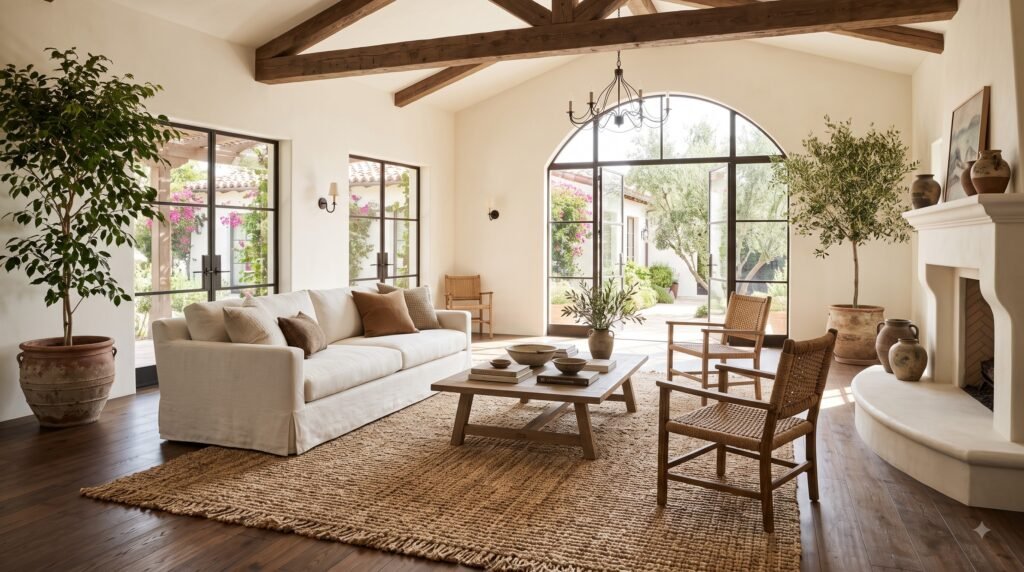
The homeowner wants a relaxed interior with cream-colored furniture, wooden accessories, and plenty of natural light.A golden-beige jute rug can complete this setting without overwhelming the room. Jute is obtained from plant stalks and is appreciated for its warm tones and distinctive woven appearance.It pairs naturally with linen, rattan, wood, and neutral upholstery.
Many interior designers also use jute as a foundation for layered rug arrangements.Placing a smaller patterned wool rug over a larger jute rug creates depth and visual contrast.
However, jute is not ideal for every location.
It can absorb moisture, develop stains, and wear under excessive friction.
Its texture also varies significantly depending on yarn thickness and weave.
Best rooms: Dry living rooms, reading corners, guest rooms, and relaxed seating areas.For households prioritizing natural appearance over plush softness, jute can be a beautiful choice.
Cotton Natural Fiber Rugs: Everyday Comfort with Indian Heritage
Cotton rugs bring together flexibility, softness, and casual elegance.
One of India’s most recognizable textile traditions is the handwoven cotton dhurrie.Dhurries are flatwoven rugs that often feature stripes, geometric patterns, and vibrant colours.
They can complement modern apartments, family homes, and casual interior spaces.Cotton rugs are usually lighter than thick wool carpets, making them easier to reposition.
Some smaller cotton constructions are washable, provided the manufacturer specifically permits washing.Their flatwoven surfaces can also be practical in spaces where furniture is moved frequently.
Imagine decorating a child’s bedroom with a colourful cotton dhurrie.
The rug introduces playful patterns while maintaining a relaxed, welcoming atmosphere.However, cotton absorbs liquids and may wear faster than dense wool in demanding locations.
Best rooms: Bedrooms, playrooms, casual lounges, guest rooms, and selected home offices.
Sisal, Seagrass and Hemp Natural Fiber Rugs
Beyond wool, jute, and cotton, three additional plant fibers deserve attention.
Sisal: Structured elegance
Sisal comes from the agave plant. Its strong fibers produce firm woven rugs that can suit dry, high-traffic environments.A neutral sisal rug can complement contemporary furniture, stone surfaces, and minimalist interiors.
However, sisal can feel coarse and is vulnerable to moisture staining.
Seagrass: Subtle natural sheen
Seagrass is woven into rugs with a relatively smooth, structured appearance.
Its surface can resist some spills better than highly absorbent jute, although prolonged moisture exposure remains undesirable.
Seagrass works particularly well in casual dining spaces and neutral interiors.
Hemp: Rustic strength
Hemp is another plant-based fiber used in textile production.
It offers strength, organic texture, and a naturally rustic appearance.
Some hemp rugs soften with use, although construction determines comfort and performance. Each of these materials serves a different design purpose.
The best selection depends on the room, maintenance expectations, and preferred texture.
Natural Fiber Rugs and Wellness-Focused Home Design
A wellness-focused home is not simply a room filled with indoor plants.
It is an environment designed to support comfort, relaxation, practical functionality, and a positive everyday experience.
Natural textures can contribute to this atmosphere.
A soft wool rug may create a comfortable reading area. A woven jute rug can visually connect indoor furniture with natural materials.
Earth-inspired colours can help establish a calm and cohesive design.
However, buyers should avoid assuming that natural rugs automatically purify indoor air, eliminate allergens, or produce measurable medical benefits.
These claims depend on evidence and product characteristics.
For households concerned about indoor air quality, consider material composition, finishing treatments, ventilation, cleaning requirements, and independently verified certifications.
A thoughtful combination of materials, lighting, furniture, and maintenance can create a more pleasant living environment.
How to Choose Natural Fiber Rugs for Every Room
Every room has different requirements.
A master bedroom may prioritize softness, while a hallway needs durability.
| Room | Suitable material | Main consideration |
| Living room | Wool | Comfort and durability |
| Bedroom | Wool or cotton | Softness |
| Guest room | Jute or cotton | Natural appearance |
| Hallway | Dense wool or sisal | Resistance to wear |
| Dining room | Low-pile wool or seagrass | Cleaning practicality |
| Home office | Flatwoven wool or sisal | Furniture movement |
Consider how often the space is used.
A lightly used formal lounge can accommodate more delicate designs than a busy family room.Households with pets or young children may prefer tightly constructed, low-pile rugs.
The ideal material should fit your daily routine, not merely your decorating inspiration.
Styling Natural Fiber Rugs in Luxury Homes
Styling a rug successfully requires attention to proportion, texture, and color.
For a modern luxury villa, consider a large ivory wool rug with subtle geometric detailing.
For a coastal home, a natural jute rug can complement white upholstery and pale wooden furniture.
For a contemporary apartment, a charcoal or terracotta cotton dhurrie can introduce visual contrast.
Layering is another effective technique.
Place a smaller patterned rug over a larger neutral foundation to create a personalized appearance.
However, ensure that the combination remains stable and does not create a tripping hazard.
Rug pads may be necessary to prevent movement.
The objective is to create visual harmony rather than simply filling empty floor space.
Choosing the Perfect Size
Rug size strongly influences the balance of a room.
An undersized rug can make expensive furniture appear disconnected.
In a living room, aim to place at least the front legs of major seating pieces on the rug.For larger arrangements, placing all furniture legs on the rug may create a more unified appearance.
Common American sizes include 5 × 8 feet, 8 × 10 feet, and 9 × 12 feet.
Large luxury villas may require 10 × 14 feet or customized dimensions.
In bedrooms, ensure the rug extends sufficiently beyond the bed to create a comfortable landing area.
For dining rooms, allow space for chairs to move without catching the rug’s edge.
Measure the complete furniture arrangement before ordering.
Are Natural Fiber Rugs Truly Sustainable?
Natural fibers are often associated with environmental responsibility because many come from renewable resources.
However, responsible sourcing requires a broader assessment.
Consider the origin of raw materials, agricultural practices, dyeing processes, chemical treatments, and manufacturing methods.
The lifespan of the rug also matters.
A durable, well-maintained product that remains in use for many years may reduce the need for frequent replacement.
Recycled cotton rugs provide another interesting option because they can reuse textile materials that might otherwise become waste.
When evaluating sustainability claims, ask manufacturers for supporting documentation.
Certifications may provide useful evidence when they apply to the actual product or manufacturing process.
Choose verified information over broad marketing promises.
The Human Story Behind Handmade Indian Rugs
Imagine a skilled Indian artisan sitting at a traditional loom.
Coloured yarns are arranged carefully, patterns are interpreted, and each section of the rug takes shape through patient work.
Depending on the construction, a handmade rug may require weaving, knotting, washing, trimming, and finishing.
These processes combine technical skill with artistic judgment.
A handcrafted rug can therefore represent more than an interior accessory.
It reflects a textile tradition developed across generations.
Indian rug-making offers a broad range of materials, designs, and weaving techniques.
For international buyers, this creates opportunities to discover distinctive products while supporting responsible sourcing relationships.
Ask suppliers about manufacturing practices, quality control, and the people involved in production.
Authentic craftsmanship deserves transparent representation.
How to Care for Natural Fiber Rugs
Good maintenance begins with regular cleaning.
Vacuum rugs using equipment suitable for the material and construction.
Avoid aggressive brushing on delicate surfaces.
Blot spills immediately instead of rubbing them.
Rotate rugs periodically to distribute wear and sunlight exposure.
Use a suitable rug pad to improve stability.
Wool rugs may require specialist cleaning.
Jute and sisal should be protected from excessive moisture.
Cotton rugs should only be washed when the manufacturer’s instructions permit it.
For valuable handmade pieces, professional advice can help prevent irreversible damage
Why Source Handmade Natural Fiber Rugs from India?
India offers established rug-making traditions and a wide variety of manufacturing techniques.
International buyers can explore wool carpets, cotton dhurries, jute rugs, and customized handmade collections.
Depending on supplier capabilities, customization may include dimensions, colours, patterns, and construction.
This flexibility can be particularly valuable for American villas, interior design projects, and boutique hospitality spaces.
However, buyers should confirm specifications, samples, production schedules, and commercial terms before ordering.
A merchant-exporter sourcing partner can assist with supplier identification and communication.
Bring Handmade Indian Craftsmanship into Your Home
Your dream interior deserves more than an ordinary rug.
At RugCraft India, we help international homeowners, interior designers, and luxury property buyers explore authentic handmade Indian rugs through suitable manufacturing partners.
Whether you need premium wool, beautiful jute, traditional cotton dhurries, or custom dimensions, share your requirements with us.
Visit rugcraftindia.com today and begin your personalized handmade rug sourcing journey.