
A rug can completely transform a room. It adds warmth, comfort, personality, texture, and visual balance while helping define different areas of your home. Whether you are decorating a living room, bedroom, dining area, hallway, office, or entryway, the right rug can make the space feel more inviting and sophisticated.
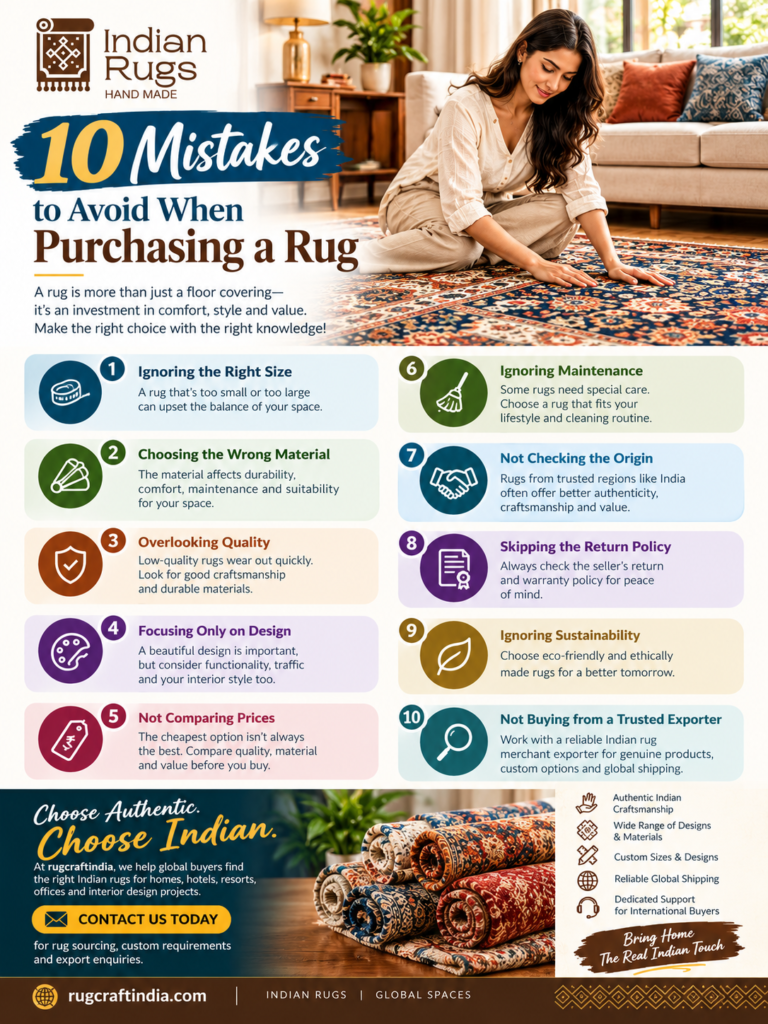
However, buying a rug is not simply about choosing a beautiful pattern or attractive colour. Mistakes to Avoid When Purchasing a Rug is an important topic for every buyer because the wrong choice can result in poor fit, difficult maintenance, unnecessary expense, or a rug that does not suit your lifestyle.
This is particularly important when purchasing a premium or handmade rug. A quality rug can be a long-term investment, so taking time to understand the most common buying mistakes can help you make a confident decision.
In this guide, we explore the most important mistakes to avoid when purchasing a rug and explain how to choose a rug that combines beauty, comfort, functionality, durability, and value.
1.Choosing the Wrong Rug Size
One of the most common mistakes to avoid when purchasing a rug is choosing the wrong size.
A rug that is too small can make furniture look disconnected and make the room feel visually unbalanced. Conversely, a rug that is too large may overwhelm the space and cover more flooring than necessary.
Before purchasing, carefully measure the room and consider your furniture arrangement.
For a living room, the rug should generally extend beneath at least the front legs of sofas and chairs. In a dining room, select a size that allows the chairs to remain on the rug even when they are pulled away from the table.
For hallways, choose a runner that leaves a visible border of flooring along the sides.
A Simple Rug-Sizing Trick
Not sure how a particular size will look?
Use masking tape to mark the proposed rug dimensions on your floor. This simple technique lets you visualize the final placement before spending money.
Taking measurements before shopping is one of the easiest ways to avoid an expensive rug-buying mistake.
2. Ignoring the Rug Material
Another important mistake is choosing a rug based only on appearance while ignoring the material.
The material influences a rug’s:
- Durability
- Comfort
- Appearance
- Maintenance requirements
- Performance in high-traffic areas
Wool is one of the most popular rug materials because it is naturally durable, comfortable, and suitable for regular use. Wool rugs can maintain their appearance for many years when properly cared for.
Cotton rugs are generally easy to maintain, while silk rugs provide an elegant and luxurious appearance but require more careful handling. Jute and hemp can work well in casual settings, while synthetic materials such as polyester and nylon may appeal to buyers looking for affordability and relatively easy maintenance.
Therefore, when considering the mistakes to avoid when purchasing a rug, never select material simply because it looks attractive. Think about where the rug will be placed and how frequently it will be used.
3. Forgetting About Your Lifestyle
A rug that looks perfect in a showroom may not necessarily be the right rug for your home.
Families with children, pets, or heavy daily foot traffic need to think carefully about durability and cleaning requirements. A delicate rug may look beautiful but may not be practical for a busy household.
For active areas, low-pile rugs and durable materials can be practical choices. In quieter spaces, you may have more flexibility to select a luxurious or delicate design.
Before buying, ask yourself:
Who will use this room every day?
Your answer should influence your choice of material, pile height, colour, construction, and maintenance requirements.
4. Prioritizing Style Over Functionality
Beautiful designs naturally attract attention. Intricate patterns, fashionable colours, and luxurious textures can make it tempting to purchase a rug immediately.
But one of the key mistakes to avoid when purchasing a rug is allowing appearance to completely replace practicality.
A rug suitable for a guest bedroom may not be suitable for a busy hallway. Similarly, a luxurious high-pile rug may not be the most convenient option for an entryway or staircase.
Always consider both beauty and function.
The ideal rug should:
- Complement your interior
- Suit the room’s purpose
- Handle expected foot traffic
- Provide the desired comfort
- Be manageable to maintain
The best rug is not necessarily the most fashionable one. It is the one that successfully combines beauty, durability, comfort, and functionality.
5. Overlooking Rug Safety
Safety is another factor that should never be ignored.
Rugs placed on smooth surfaces such as tile, marble, or hardwood can move or slide, creating a potential tripping hazard. This is particularly important in hallways, entrances, and staircases.
A good-quality rug pad or appropriate non-slip backing can help keep the rug in position. A rug pad can also provide additional cushioning and help reduce friction between the rug and flooring.
Therefore, when reviewing the mistakes to avoid when purchasing a rug, remember that safety should be considered alongside appearance and comfort.
A beautiful rug is not a successful purchase if it creates a safety problem in your home.
6. Choosing the Wrong Rug Colour
Colour has a powerful effect on the appearance of a room.
Many buyers fall in love with a rug colour in a showroom without considering how it will interact with their existing furniture, walls, curtains, flooring, and accessories.
Instead of choosing a colour in isolation, look at the entire room.
If your room already contains strong colours, a neutral rug can provide visual balance. If your furniture and walls are primarily neutral, a colourful rug can become an attractive focal point.
You can also coordinate rug colours with:
- Cushions
- Curtains
- Artwork
- Furniture
- Decorative accessories
The goal is not necessarily to make everything match. Instead, create a harmonious relationship between the rug and the rest of the interior.
7. Ignoring the Function of the Room
Different rooms demand different types of rugs.
This is another major point in our list of mistakes to avoid when purchasing a rug.
Consider the specific requirements of the room before making your purchase.
Choose a comfortable and visually appealing rug that works with the furniture arrangement.
Bedroom
Soft and comfortable materials can help create a warm and relaxing atmosphere.
Dining Room
Select a practical material that can tolerate regular use and is manageable to clean.
Hallway
A durable runner is generally more appropriate because hallways experience frequent foot traffic.
Staircase
Safety becomes particularly important, so an appropriate non-slip runner should be considered.
Entryway
Darker colours and practical materials can help conceal everyday dirt and withstand regular use.
The perfect rug depends not only on your personal taste but also on where you intend to use it.
8.Neglecting Rug Maintenance Requirements
Another mistake buyers frequently make is thinking about cleaning only after purchasing the rug.
Every rug requires some level of care, but maintenance requirements can differ significantly depending on its material, construction, pile, and usage.
High-pile rugs can provide exceptional softness and comfort, but they may require more attention during cleaning. Low-pile rugs are often easier to maintain and can be practical for busy households.
Before purchasing, find out about:
- Regular vacuuming requirements
- Stain resistance
- Cleaning methods
- Professional cleaning requirements
- Expected durability
- Suitable cleaning products
Choosing a rug that matches your willingness and ability to maintain it can save considerable effort over time.
9.Buying Without Accurate Measurements
Never rely on guesswork when purchasing a rug.
Even experienced homeowners can underestimate or overestimate the amount of space available.
Before shopping, measure:
- Overall room dimensions
- Available floor space
- Furniture placement
- Hallway length
- Staircase dimensions
- Dining table and chair arrangement
Accurate measurements help you select the correct rug size and reduce the possibility of costly returns or an unsuitable purchase.
If you are shopping online, always compare your measurements with the manufacturer’s stated rug dimensions.
Taking a few minutes to measure your space can prevent one of the most frustrating mistakes to avoid when purchasing a rug.
10.Choosing the Cheapest Rug Instead of the Best Value.
Price naturally matters when purchasing a rug, but focusing exclusively on the lowest price can be misleading.
A cheaper rug may appear attractive initially, but if it wears out quickly, loses its appearance, or requires frequent replacement, the long-term cost may actually be higher.
Hand-knotted rugs can cost more because they involve skilled craftsmanship, quality materials, and considerable time to produce. When properly maintained, many high-quality hand-knotted rugs can provide long-lasting value.
Machine-made or tufted rugs can still be appropriate for buyers with a limited budget, depending on their requirements.
Instead of asking only:
“How much does this rug cost?”
also ask:
“What value will this rug provide over its lifetime?”
Considering quality, craftsmanship, durability, material, and maintenance can help you make a better purchasing decision.
How to Avoid These Rug-Buying Mistakes
Before purchasing your next rug, use this simple decision-making process:
Step 1: Measure Your Space
Determine exactly where the rug will go and measure the available area.
Step 2: Identify the Room’s Purpose
Think about foot traffic, furniture placement, children, pets, and everyday activities.
Step 3: Select the Right Material
Choose a material based on durability, comfort, appearance, cleaning requirements, and budget.
Step 4: Consider Colour and Design
Look at the existing interior rather than choosing a rug colour separately.
Step 5: Check Maintenance Requirements
Understand how often the rug needs cleaning and whether professional care is required.
Step 6: Consider Safety
Use a suitable rug pad or non-slip solution where necessary.
Step 7: Evaluate Quality and Value
Do not automatically choose the cheapest option. Consider craftsmanship, material quality, durability, and expected lifespan.
Why Handmade Indian Rugs Can Be a Worthwhile Choice
For buyers seeking character, craftsmanship, and long-term appeal, handmade Indian rugs can offer a distinctive option.
Indian rug-making traditions combine skilled craftsmanship with a wide range of designs, colours, materials, and construction techniques. Handmade rugs can bring warmth and individuality to residential and commercial interiors.
However, buyers should still follow the same principles discussed above. A handmade rug should be selected according to size, material, room function, maintenance requirements, design preferences, and budget.
A beautifully crafted rug is only the right rug when it is also right for your space.
Final Thoughts: Make Your Next Rug Purchase With Confidence
Purchasing a rug should be an exciting experience, not a source of regret.
By understanding the mistakes to avoid when purchasing a rug, you can make a more informed decision and choose a piece that genuinely works for your home.
Avoid choosing the wrong size. Do not ignore material quality. Think about your lifestyle. Consider functionality and safety. Check colour compatibility. Understand maintenance requirements. Measure your space carefully, and evaluate long-term quality rather than focusing only on the initial price.
The perfect rug should do more than look beautiful.
It should fit your space, complement your décor, suit your lifestyle, provide comfort, and deliver lasting value.
Ready to Find the Right Rug?
If you are searching for a high-quality handmade Indian rug for your home, luxury villa, hotel, office, or interior design project, we can help you source rugs according to your preferred size, material, colour, design, craftsmanship, and budget.
As an India-based merchant exporter, we help international buyers explore beautifully crafted Indian rugs while focusing on quality, customization, and reliable sourcing.
Don’t let common rug-buying mistakes turn a beautiful investment into an expensive disappointment. Contact us today to discuss your rug requirements and discover the right handmade Indian rug for your space.
Your perfect rug should not simply fill a floor—it should complete the room.
Pingback: Handmade Rug vs. Machine-Made Rug: Which Is Better?
Pingback: Handmade Rug vs. Machine-Made Rug
Pingback: Indian Rug Buying Guide for USA Customers: From Choosing a Rug to Bringing a Story Home
Pingback: Indian Hand made rugs for hotels: A Complete Guide to Choosing Luxury Hotel Rugs
Pingback: Right Rug Size for Your Home: A Practical Room-by-Room Guide
Pingback: Children's Rug: Ultimate 2026 Guide to a Safe, Beautiful & Happy Kids’ Room
Pingback: How to Choose the Right Rug Material for Home : A Complete Buyer's Guide